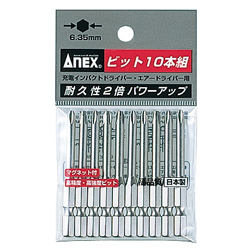
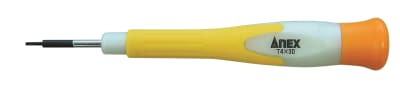
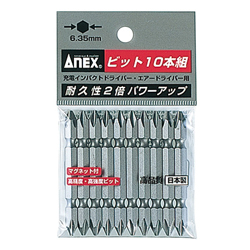
[Features]·The shape of the tip has a structure that makes it difficult to come out (ACR (R) for the Phillips, serrated for the Slotted) to prevent the cutting edge from rising from the screw.·With a hexagonal bolster, you can use a wrench to turn it more strongly.
[Features]·The shape of the tip has a structure that makes it difficult to come out (ACR (R) for the Phillips, serrated for the Slotted) to prevent the cutting edge from rising from the screw.·With a hexagonal bolster, you can use a wrench to turn it more strongly.
[Features]·The shape of the tip has a structure that makes it difficult to come out (ACR (R) for the Phillips, serrated for the Slotted) to prevent the cutting edge from rising from the screw.·With a hexagonal bolster, you can use a wrench to turn it more strongly.
[Features]·The shape of the tip has a structure that makes it difficult to come out (ACR (R) for the Phillips, serrated for the Slotted) to prevent the cutting edge from rising from the screw.·With a hexagonal bolster, you can use a wrench to turn it more strongly.
[Features]·The shape of the tip has a structure that makes it difficult to come out (ACR (R) for the Phillips, serrated for the Slotted) to prevent the cutting edge from rising from the screw.·With a hexagonal bolster, you can use a wrench to turn it more strongly.
[Features]·The shape of the tip has a structure that makes it difficult to come out (ACR (R) for the Phillips, serrated for the Slotted) to prevent the cutting edge from rising from the screw.·With a hexagonal bolster, you can use a wrench to turn it more strongly.