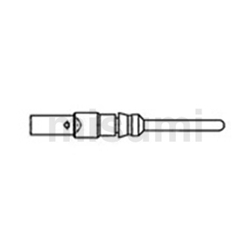
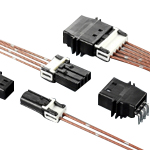
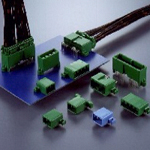
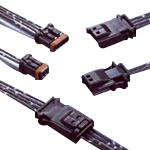
This pin connector has flanges to screw in to the board.[Features]・This pin connector has flanges on both sides of the insulator to screw in to the board.・By screwing in using the flanges, it can be fixed more firmly to the board.・The straight type is molded to alleviate stress on the soldered parts, which prevents cracking of solder due to changes in temperature.・This prevents differences in expansion coefficient between the board and insulator due to rapid temperature changes, and solder crack
This pin connector has flanges to screw in to the board.[Features]・This pin connector has flanges on both sides of the insulator to screw in to the board.・By screwing in using the flanges, it can be fixed more firmly to the board.・The straight type is molded to alleviate stress on the soldered parts, which prevents cracking of solder due to changes in temperature.・This prevents differences in expansion coefficient between the board and insulator due to rapid temperature changes, and solder crack
This pin connector has flanges to screw in to the board.[Features]・This pin connector has flanges on both sides of the insulator to screw in to the board.・By screwing in using the flanges, it can be fixed more firmly to the board.・The straight type is molded to alleviate stress on the soldered parts, which prevents cracking of solder due to changes in temperature.・This prevents differences in expansion coefficient between the board and insulator due to rapid temperature changes, and solder crack
This pin connector has flanges to screw in to the board.[Features]・This pin connector has flanges on both sides of the insulator to screw in to the board.・By screwing in using the flanges, it can be fixed more firmly to the board.・The straight type is molded to alleviate stress on the soldered parts, which prevents cracking of solder due to changes in temperature.・This prevents differences in expansion coefficient between the board and insulator due to rapid temperature changes, and solder crack
This pin connector has flanges to screw in to the board.[Features]・This pin connector has flanges on both sides of the insulator to screw in to the board.・By screwing in using the flanges, it can be fixed more firmly to the board.・The straight type is molded to alleviate stress on the soldered parts, which prevents cracking of solder due to changes in temperature.・This prevents differences in expansion coefficient between the board and insulator due to rapid temperature changes, and solder crack
This pin connector has flanges to screw in to the board.[Features]・This pin connector has flanges on both sides of the insulator to screw in to the board.・By screwing in using the flanges, it can be fixed more firmly to the board.・The straight type is molded to alleviate stress on the soldered parts, which prevents cracking of solder due to changes in temperature.・This prevents differences in expansion coefficient between the board and insulator due to rapid temperature changes, and solder crack