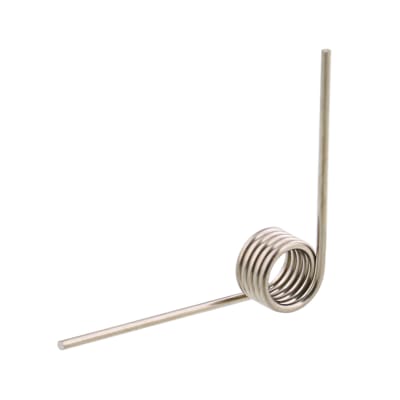
Standardized torsion coil springs in response to the needs of people who have problems with design and calculation.[Features]· A torsion coil spring that uses a stainless steel wire for cold forming and a wire diameter of ø0.3 mm to ø2.0 mm that is commonly used.· JIS G 4313 (stainless steel wire for spring) Class B SUS304 WP-B.*Characteristics include corrosion-resistance and heat resistance (about 250°C).· 350°C to 400°C / low temperature annealing (*no surface treatment).
Standardized torsion coil springs in response to the needs of people who have problems with design and calculation.[Features]· A torsion coil spring that uses a stainless steel wire for cold forming and a wire diameter of ø0.3 mm to ø2.0 mm that is commonly used.· JIS G 4313 (stainless steel wire for spring) Class B SUS304 WP-B.*Characteristics include corrosion-resistance and heat resistance (about 250°C).· 350°C to 400°C / low temperature annealing (*no surface treatment).
Standardized torsion coil springs in response to the needs of people who have problems with design and calculation.[Features]· A torsion coil spring that uses a stainless steel wire for cold forming and a wire diameter of ø0.3 mm to ø2.0 mm that is commonly used.· JIS G 4313 (stainless steel wire for spring) Class B SUS304 WP-B.*Characteristics include corrosion-resistance and heat resistance (about 250°C).· 350°C to 400°C / low temperature annealing (*no surface treatment).
Standardized torsion coil springs in response to the needs of people who have problems with design and calculation.[Features]· A torsion coil spring that uses a stainless steel wire for cold forming and a wire diameter of ø0.3 mm to ø2.0 mm that is commonly used.· JIS G 4313 (stainless steel wire for spring) Class B SUS304 WP-B.*Characteristics include corrosion-resistance and heat resistance (about 250°C).· 350°C to 400°C / low temperature annealing (*no surface treatment).
Standardized torsion coil springs in response to the needs of people who have problems with design and calculation.[Features]· A torsion coil spring that uses a stainless steel wire for cold forming and a wire diameter of ø0.3 mm to ø2.0 mm that is commonly used.· JIS G 4313 (stainless steel wire for spring) Class B SUS304 WP-B.*Characteristics include corrosion-resistance and heat resistance (about 250°C).· 350°C to 400°C / low temperature annealing (*no surface treatment).
Standardized torsion coil springs in response to the needs of people who have problems with design and calculation.[Features]· A torsion coil spring that uses a stainless steel wire for cold forming and a wire diameter of ø0.3 mm to ø2.0 mm that is commonly used.· JIS G 4313 (stainless steel wire for spring) Class B SUS304 WP-B.*Characteristics include corrosion-resistance and heat resistance (about 250°C).· 350°C to 400°C / low temperature annealing (*no surface treatment).
Standardized torsion coil springs in response to the needs of people who have problems with design and calculation.[Features]· A torsion coil spring that uses a stainless steel wire for cold forming and a wire diameter of ø0.3 mm to ø2.0 mm that is commonly used.· JIS G 4313 (stainless steel wire for spring) Class B SUS304 WP-B.*Characteristics include corrosion-resistance and heat resistance (about 250°C).· 350°C to 400°C / low temperature annealing (*no surface treatment).
Standardized torsion coil springs in response to the needs of people who have problems with design and calculation.[Features]· A torsion coil spring that uses a stainless steel wire for cold forming and a wire diameter of ø0.3 mm to ø2.0 mm that is commonly used.· JIS G 4313 (stainless steel wire for spring) Class B SUS304 WP-B.*Characteristics include corrosion-resistance and heat resistance (about 250°C).· 350°C to 400°C / low temperature annealing (*no surface treatment).
Standardized torsion coil springs in response to the needs of people who have problems with design and calculation.[Features]· A torsion coil spring that uses a stainless steel wire for cold forming and a wire diameter of ø0.3 mm to ø2.0 mm that is commonly used.· JIS G 4313 (stainless steel wire for spring) Class B SUS304 WP-B.*Characteristics include corrosion-resistance and heat resistance (about 250°C).· 350°C to 400°C / low temperature annealing (*no surface treatment).
Standardized torsion coil springs in response to the needs of people who have problems with design and calculation.[Features]· A torsion coil spring that uses a stainless steel wire for cold forming and a wire diameter of ø0.3 mm to ø2.0 mm that is commonly used.· JIS G 4313 (stainless steel wire for spring) Class B SUS304 WP-B.*Characteristics include corrosion-resistance and heat resistance (about 250°C).· 350°C to 400°C / low temperature annealing (*no surface treatment).
Standardized torsion coil springs in response to the needs of people who have problems with design and calculation.[Features]· A torsion coil spring that uses a stainless steel wire for cold forming and a wire diameter of ø0.3 mm to ø2.0 mm that is commonly used.· JIS G 4313 (stainless steel wire for spring) Class B SUS304 WP-B.*Characteristics include corrosion-resistance and heat resistance (about 250°C).· 350°C to 400°C / low temperature annealing (*no surface treatment).
Standardized torsion coil springs in response to the needs of people who have problems with design and calculation.[Features]· A torsion coil spring that uses a stainless steel wire for cold forming and a wire diameter of ø0.3 mm to ø2.0 mm that is commonly used.· JIS G 4313 (stainless steel wire for spring) Class B SUS304 WP-B.*Characteristics include corrosion-resistance and heat resistance (about 250°C).· 350°C to 400°C / low temperature annealing (*no surface treatment).
Standardized torsion coil springs in response to the needs of people who have problems with design and calculation.[Features]· A torsion coil spring that uses a stainless steel wire for cold forming and a wire diameter of ø0.3 mm to ø2.0 mm that is commonly used.· JIS G 4313 (stainless steel wire for spring) Class B SUS304 WP-B.*Characteristics include corrosion-resistance and heat resistance (about 250°C).· 350°C to 400°C / low temperature annealing (*no surface treatment).
Standardized torsion coil springs in response to the needs of people who have problems with design and calculation.[Features]· A torsion coil spring that uses a stainless steel wire for cold forming and a wire diameter of ø0.3 mm to ø2.0 mm that is commonly used.· JIS G 4313 (stainless steel wire for spring) Class B SUS304 WP-B.*Characteristics include corrosion-resistance and heat resistance (about 250°C).· 350°C to 400°C / low temperature annealing (*no surface treatment).
Standardized torsion coil springs in response to the needs of people who have problems with design and calculation.[Features]· A torsion coil spring that uses a stainless steel wire for cold forming and a wire diameter of ø0.3 mm to ø2.0 mm that is commonly used.· JIS G 4313 (stainless steel wire for spring) Class B SUS304 WP-B.*Characteristics include corrosion-resistance and heat resistance (about 250°C).· 350°C to 400°C / low temperature annealing (*no surface treatment).
Standardized torsion coil springs in response to the needs of people who have problems with design and calculation.[Features]· A torsion coil spring that uses a stainless steel wire for cold forming and a wire diameter of ø0.3 mm to ø2.0 mm that is commonly used.· JIS G 4313 (stainless steel wire for spring) Class B SUS304 WP-B.*Characteristics include corrosion-resistance and heat resistance (about 250°C).· 350°C to 400°C / low temperature annealing (*no surface treatment).
Standardized torsion coil springs in response to the needs of people who have problems with design and calculation.[Features]· A torsion coil spring that uses a stainless steel wire for cold forming and a wire diameter of ø0.3 mm to ø2.0 mm that is commonly used.· JIS G 4313 (stainless steel wire for spring) Class B SUS304 WP-B.*Characteristics include corrosion-resistance and heat resistance (about 250°C).· 350°C to 400°C / low temperature annealing (*no surface treatment).
Standardized torsion coil springs in response to the needs of people who have problems with design and calculation.[Features]· A torsion coil spring that uses a stainless steel wire for cold forming and a wire diameter of ø0.3 mm to ø2.0 mm that is commonly used.· JIS G 4313 (stainless steel wire for spring) Class B SUS304 WP-B.*Characteristics include corrosion-resistance and heat resistance (about 250°C).· 350°C to 400°C / low temperature annealing (*no surface treatment).
Standardized torsion coil springs in response to the needs of people who have problems with design and calculation.[Features]· A torsion coil spring that uses a stainless steel wire for cold forming and a wire diameter of ø0.3 mm to ø2.0 mm that is commonly used.· JIS G 4313 (stainless steel wire for spring) Class B SUS304 WP-B.*Characteristics include corrosion-resistance and heat resistance (about 250°C).· 350°C to 400°C / low temperature annealing (*no surface treatment).
Standardized torsion coil springs in response to the needs of people who have problems with design and calculation.[Features]· A torsion coil spring that uses a stainless steel wire for cold forming and a wire diameter of ø0.3 mm to ø2.0 mm that is commonly used.· JIS G 4313 (stainless steel wire for spring) Class B SUS304 WP-B.*Characteristics include corrosion-resistance and heat resistance (about 250°C).· 350°C to 400°C / low temperature annealing (*no surface treatment).